Manufacturing has never been a more dynamic field, making the need for seamless integration among different systems all the more essential. One innovative manufacturing integration that has taken off is Salesforce’s CRM/ERP integration – an undisputed leader in customer relationship management (CRM). This powerful partnership offers numerous benefits, including increased data visibility, streamlined workflows and enhanced customer service.
Integrating Salesforce and ERP systems for manufacturing industry businesses does not merely involve connecting two software programs – it creates a unified platform capable of handling every aspect of business, from sales, customer service and production management to financial oversight and financial accounting.
Integrating Salesforce and ERP can give manufacturers an advantage in competitive markets by increasing operational efficiencies and creating exceptional customer experiences.
But why is integration so significant, and how can it improve manufacturers’ operations? Let’s delve into the Salesforce and ERP integration world to gain more insight into its significance, benefits and steps involved with achieving it.
Understanding Salesforce and ERP Integration
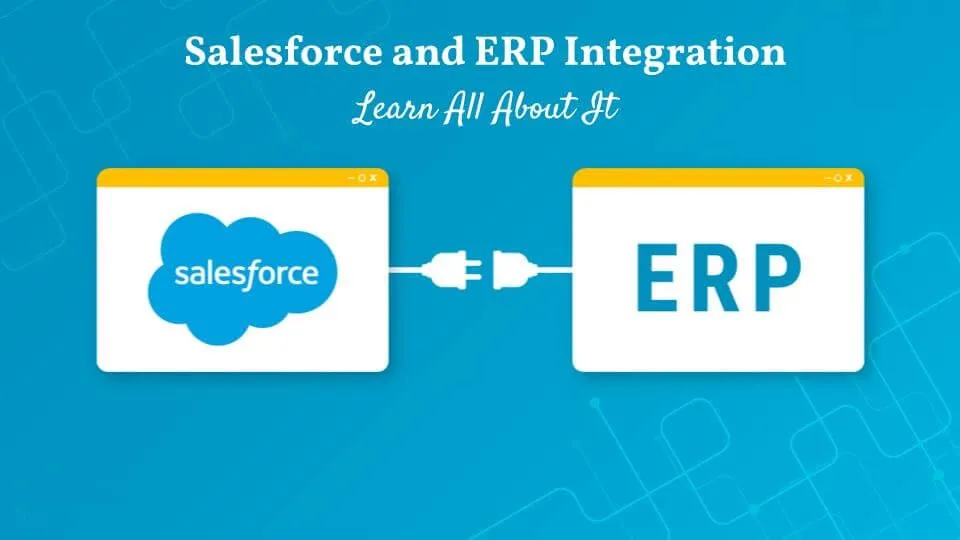
Salesforce and ERP integration is the fusion of the CRM platform with an ERP system, providing seamless data exchange. This connection ensures all departments within a manufacturing organization have access to up-to-date, accurate information.
As the premier CRM platform, Salesforce excels at managing customer relationships and improving customer service, with features for tracking customer interactions, managing sales pipelines and providing tailored experiences to clients. However, an ERP system serves an essential purpose – managing core business processes such as production, inventory control, supply chain operations and financial control.
Integration between these two systems provides a powerful platform capable of handling all aspects of manufacturing business operations. Manual data entry becomes unnecessary by automatically reflecting data entered or updated in one system into another, while errors can be reduced significantly.

When a sales representative updates an order in Salesforce, the ERP system automatically syncs this information and ensures the production department can quickly adjust production schedules accordingly. Furthermore, whenever inventory data changes are entered into the ERP system by production department employees, their sales teams can see this update directly within Salesforce and provide accurate delivery dates to customers.
Why Integrate Salesforce with Your ERP System?
Integrating Salesforce with your ERP system is not just a technical upgrade; it’s a strategic move that can unlock numerous benefits for your manufacturing business. Let’s delve into some of the compelling reasons why this integration is worth considering:
- Faster Customer Dealings: In the competitive manufacturing industry, speed is of the essence. The vendor that responds first often secures the deal. By integrating Salesforce with your ERP system, you can ensure that your sales reps have immediate access to customer and prospect information, enabling them to respond quickly and secure more deals.
- Enhanced Customer Service: With integrated systems, your customer service team can access up-to-date customer information, including their purchase history, payment details, and interaction history. It allows them to provide personalized and efficient service, enhancing customer satisfaction and loyalty.
- Increased Data Visibility: Integration ensures seamless data flow between Salesforce and your ERP system. It means that different departments, from sales to finance, can access and use the data they need, improving collaboration and decision-making.
- Automated Data Management Tasks: Manual data entry and updates can be time-consuming and prone to errors. Integration automates these tasks, saving time and reducing the risk of errors.
- Improved Data Accuracy: With data automatically synced between Salesforce and your ERP system, you can ensure that your teams always work with accurate and up-to-date information.
Key Use Cases of Salesforce and ERP Integration
Salesforce and ERP integration can address numerous business challenges and open up new opportunities for cross-departmental cooperation. Here are some key use cases that highlight the potential of this integration:
- Account and Contact Information Synchronization: Customer information is often stored in both Salesforce and your ERP system. Integration can synchronize this data, ensuring consistent customer profiles across both platforms.
- Invoices and Payment History: Integration allows the transfer of invoice and payment data from your ERP system to Salesforce. It enables your sales and account management teams to make informed decisions about providing discounts or collecting debts.
- Quote and Order Management: For companies with complex product configurations, creating accurate quotes can be challenging. The integration allows proposals created in Salesforce to be turned into actual orders in the ERP system, providing visibility into the order status.
- Inventory Data: Sales teams need access to real-time inventory data to provide accurate shipping dates to customers. Integration ensures this data is readily available in Salesforce.
- Product and Price Books: The ERP system typically stores Product and price information. The integration automatically syncs this data with Salesforce, ensuring your sales reps can always access up-to-date product lists and pricing information.
Steps to Integrate Salesforce with Your Manufacturing ERP System
The process of integrating Salesforce with your ERP system involves several steps, each of which is crucial to ensuring a smooth and effective integration. Here’s a step-by-step guide to this process:
- Identify Your Integration Needs: The first step is to identify what data needs to be shared between Salesforce and your ERP system. It could include customer information, sales data, inventory data, and more.
- Choose the Right Integration Method: Several methods exist for integrating Salesforce with an ERP system, including using APIs, middleware, or pre-built connectors. The right method will depend on your specific needs and the capabilities of your ERP system.
- Define Data Transfer Methods: Decide how data will be transferred between the systems. It could be through JSON or XML, using REST APIs. The choice depends on your data’s complexity and your systems’ capabilities.
- Handle Insertable and Updatable Data: Some data, like invoices, can be new or existing with modifications. It’s important to capture changes to the data, and the integration should handle both insertable and updatable data.
- Set Up Error Handling Mechanisms: Errors can occur during the integration process, and it’s important to have mechanisms to handle these. It could involve setting up separate databases for successful and failed records and sending back error records for correction.
- Test the Integration: Before going live, thoroughly test the integration to ensure that data is correctly synced between the two systems and that all features work as expected.
Challenges and Solutions in Salesforce and ERP Integration
While integrating Salesforce with your ERP system can bring numerous benefits, it’s not without its challenges. Here are some common challenges and their solutions:
- Data Consistency: Ensuring data consistency across both systems can be a challenge. It can be addressed by setting up a two-way synchronization, where any changes made in one system are automatically reflected in the other.
- Data Security: Protecting sensitive data during the integration process is crucial. It can be achieved by implementing robust security measures, such as data encryption and secure APIs.
- System Compatibility: Not all ERP systems are compatible with Salesforce. In such cases, custom integrations may be required. Salesforce’s API can be used to build custom integrations with other systems.
- Complexity of Data: Handling complex data, such as nested data structures or large data volumes, can be challenging. It can be addressed by using advanced data handling and processing techniques.
- Cost of Integration: Integration can be a concern for some businesses. However, the long-term benefits of integration, such as improved efficiency and data accuracy, often outweigh the initial costs.
Remember, the integration of Salesforce and ERP is not a one-time process but an ongoing one that requires regular monitoring and maintenance. By addressing these challenges head-on, you can ensure a successful integration that brings lasting benefits to your business.
Conclusion
Integrating Salesforce with your manufacturing ERP system is a strategic move that can significantly enhance your business operations. You can improve data visibility, streamline workflows, and deliver superior customer service by ensuring seamless data flow between the two systems.
From synchronizing account and contact information to managing quotes and orders, the use cases of this integration are vast and varied. However, the integration process can be complex, involving several steps and potential challenges. By identifying your integration needs, choosing the right integration method, defining data transfer methods, handling insertable and updatable data, setting up error-handling mechanisms, and thoroughly testing the integration, you can overcome these challenges and ensure a successful integration.
Remember, the benefits of this integration are not just immediate but also long-term. It can help you deal faster with customers, automate data management tasks, and make more informed decisions. Moreover, it can increase data accuracy, reduce errors and improve customer satisfaction.
In conclusion, integrating Salesforce with your ERP system is not just about connecting two systems; it’s about creating a unified platform that can handle all aspects of your business, thereby giving you a competitive edge in the manufacturing industry.