When people think of workouts, they often picture lifting weights or running miles. But what about exercising the most powerful organ in your body—your brain? Enter the Freecell card game, a timeless classic that not only entertains but also sharpens cognitive skills with every move. Often overlooked as mere leisure, Freecell is a strategic mental challenge that improves memory, focus, and problem-solving abilities. Playing the Freecell card game regularly is like hitting the gym for your mind, strengthening neural connections and enhancing mental agility.
In this article, we’ll explore how the Freecell card game serves as a mental workout, its fascinating history, the rules that define its gameplay, and tips to master the game. Whether you’re a casual player or a seasoned strategist, understanding the deeper impact of Freecell can transform the way you approach this classic solitaire variant.
The History of Freecell
The origins of Freecell date back to the 1970s, when it first emerged as a digital game for mainframe computers. Its earliest known version was created by Paul Alfille, who adapted the game from an older solitaire variant called “Eight Off.” What set Freecell apart was its structure; unlike many solitaire games, nearly every deal in Freecell is winnable if played correctly. This unique aspect has contributed to its massive popularity, particularly when it became a staple in Microsoft Windows operating systems starting with Windows 95.
Freecell’s Rise to Popularity
The integration of Freecell into Windows not only boosted its visibility but also introduced millions of people to its strategic depth. Unlike its cousin, Klondike, Freecell is entirely skill-based. Every move matters, and players must think several steps ahead to clear the tableau and stack all the cards in the foundation piles. This has given the Freecell card game a reputation for being both challenging and fair.
How to Play Freecell Card Game
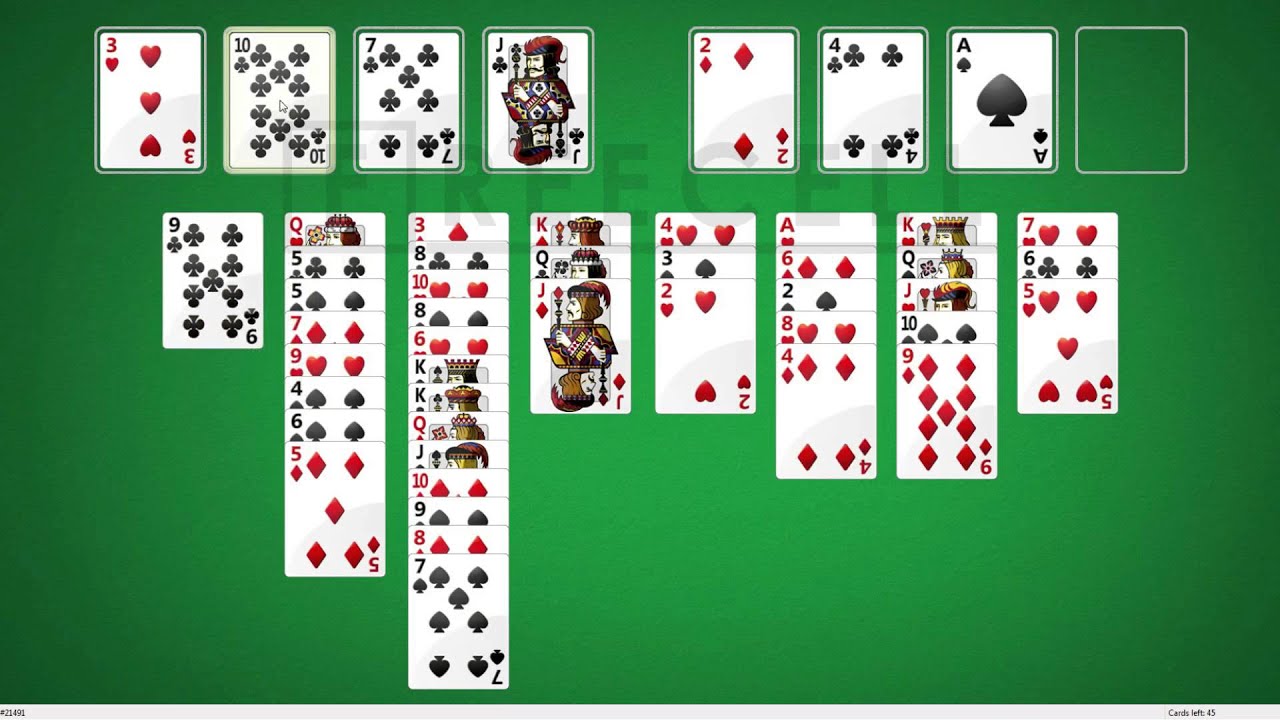
The setup for Freecell consists of a standard 52-card deck dealt into eight tableau columns. Four empty “free cells” are available to temporarily hold cards, and four “foundation piles” serve as the ultimate goal for stacking cards from Ace to King by suit.
Basic Rules
- Full Visibility: All cards are dealt face-up, allowing players to see all possible moves right from the start. This transparency makes Freecell a game of pure strategy rather than luck.
- Moving Cards: You can move cards one at a time, either to another column in descending order and alternating color (for example, a red 7 on a black 8) or to one of the four free cells. These free cells act as temporary holding spaces and can only hold one card each.
- Empty Spaces: Only Kings can be placed on empty tableau spaces, giving you the chance to reorganize columns and reveal hidden cards.
- Building Foundations: The primary goal is to build each foundation pile in ascending order by suit, starting with the Ace and ending with the King.
- Undo Moves: Many digital versions of Freecell allow players to undo moves, adding an element of experimentation to strategizing the best path forward.
Advanced Techniques
Mastering the Freecell card game involves more than just knowing the rules—it requires strategic foresight:
- Think Ahead: Always consider the impact of your move three or four steps down the line. Look for sequences that can be unblocked or reorganized.
- Manage Free Cells Wisely: The more free cells you have available, the more flexibility you retain. Avoid filling them up too quickly unless it’s absolutely necessary for unlocking critical cards.
- Build with Purpose: Try to uncover lower cards and free up tableau columns early. Clearing a tableau column entirely creates a valuable empty space where a King and its sequence can be moved.
- Focus on Foundation Early: Whenever possible, move Aces and Twos to the foundation piles early to clear space in the tableau and unlock more strategic options.
- Limit Wasteful Moves: Aim to minimize the movement of cards to free cells unless it directly contributes to advancing the game.
Cognitive Benefits of Playing Freecell Card Game
Playing the Freecell card game is not only entertaining but also mentally enriching. Research suggests that engaging in strategy-based games like Freecell can improve:

Memory and Focus
Each game challenges you to remember card positions and plan moves accordingly. This enhances short-term memory and concentration, particularly as you juggle multiple moves in your head.
Problem-Solving Skills
The very structure of Freecell demands problem-solving. With nearly every deal being solvable, success hinges on your ability to anticipate challenges and overcome them through calculated decisions.
Patience and Perseverance
Unlike games of chance, Freecell rewards patience. Rushing through moves without planning often leads to a deadlock. The game teaches patience, resilience, and the importance of strategic thinking.
Tips and Tricks for Mastering Freecell
- Use Empty Columns Wisely: Empty tableau spaces are more valuable than free cells since they can hold full sequences of cards. Clearing out a tableau not only provides more movement options but also acts as a storage space for sequenced runs of cards, allowing for deeper strategic play.
- Prioritize Aces and Twos: Early placement of these cards into foundation piles clears the way for other strategic moves. Uncovering these low-value cards as soon as possible frees up valuable tableau space and minimizes clutter.
- Don’t Rush to Fill Free Cells: Keeping these spaces available gives you more options as the game progresses. Consider free cells as emergency options, not primary storage, as filling them too early can severely limit your mobility.
- Plan Multiple Moves Ahead: Always look at the big picture before committing to a single move. Visualize the cascade effect of each action, particularly when clearing out tableau columns or maneuvering high-value cards.
- Avoid Unnecessary Moves: Every move counts in Freecell. Refrain from shifting cards aimlessly—each action should serve a purpose, either to uncover a hidden card or build towards the foundation piles.
Why You Should Play Freecell Card Game Regularly
Playing the Freecell card game is not just a pastime—it’s a mental workout with substantial benefits for your cognitive health and overall well-being. In a world dominated by constant distractions, few activities allow for focused mental engagement quite like Freecell. With each move carefully planned and executed, the game forces you to flex your cognitive muscles, enhancing not just your memory but also your ability to strategize and solve problems efficiently.
Enhances Cognitive Flexibility
One of the standout benefits of playing Freecell regularly is the enhancement of cognitive flexibility. This refers to your brain’s ability to switch between thinking about different concepts or to think about multiple concepts simultaneously. In Freecell, you are often required to rearrange cards, predict future moves, and adapt strategies on the fly—all of which improve your mental adaptability over time.
Boosts Patience and Concentration
In a digital age of rapid gratification, patience is a rare skill. Freecell encourages a slower, more deliberate pace, teaching players the importance of careful planning and thoughtful decision-making. The game rewards patience and punishes hasty decisions, creating a learning environment where every move counts.
Promotes Strategic Thinking
Freecell is essentially a puzzle that needs to be solved, and each game is a new challenge. This constant need for strategic thinking helps sharpen your planning skills, enhancing your ability to anticipate problems and consider long-term consequences—not just in the game, but in real-world decision-making as well.
Reduces Stress and Boosts Relaxation
The repetitive and rhythmic nature of Freecell can also serve as a form of meditation. Many players report feeling more relaxed and focused after playing, as the game requires deep concentration that often distracts from daily worries. It’s not just a mental workout—it’s a mental escape.
Whether you’re looking to relax or engage in a challenging mental exercise, Freecell offers the perfect blend of both. By regularly playing the Freecell card game, you’re not just passing time—you’re actively boosting your brainpower and enhancing your cognitive skills.
The Freecell card game stands out as more than just a casual game—it’s a brain-boosting activity that challenges your memory, focus, and problem-solving abilities. With its rich history and proven mental benefits, Freecell remains one of the most engaging solitaire games available. So, the next time you open your computer or shuffle a deck of cards, consider giving the Freecell card game a try. You might just discover that it’s more than fun—it’s a true workout for the brain.